
Data Center Development Explained
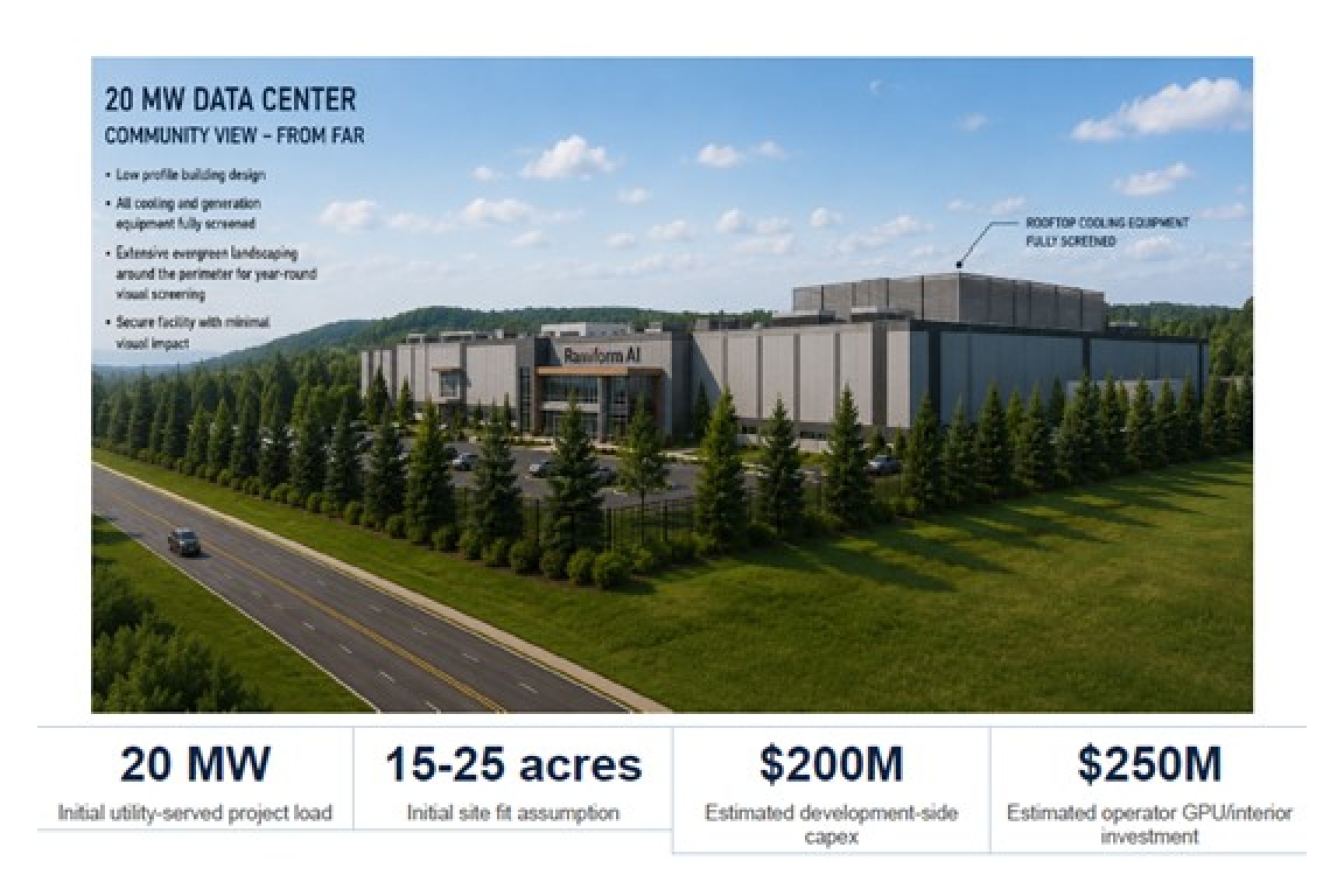
Economic Development work is taking shape at the Calhoun County Business Park, strategically located at the intersection of U.S. Highway 20 and Iowa Highway 4.
For several years, Calhoun County Economic Development Corporation (CCEDC), the Calhoun County Board of Supervisors, utility partners and community leaders have worked to position this property for development. Site studies are ongoing, infrastructure needs identified, marketing efforts strengthened and important partnerships built.
Today, that preparation is opening the door to a significant new opportunity.
The rapid growth of artificial intelligence, cloud computing and digital technology is driving demand for data centers across the country.
Data centers are the physical infrastructure behind our increasingly digital world. They house the servers and technology supporting online banking, healthcare records, manufacturing systems, emergency communications, cloud storage, artificial intelligence and countless other services used every day.
When someone talks about the "cloud" they are talking about data centers.
As the industry grows, companies are exploring rural locations where land, energy, fiber, infrastructure and room for future expansion are available. Calhoun County has many of those assets.
The Business Park offers available land at a major highway intersection, access to high-speed fiber and established utility partnerships. Those advantages have positioned Calhoun County to participate in conversations about a potential data center development.
A project of this scale requires collaboration among county leadership, economic development partners, energy and telecommunications providers, engineers, developers and other stakeholders.
Those conversations are underway as partners evaluate what would be required to support a potential project.
Energy is a significant consideration, as is water use. Modern data center technology continues to evolve, and newer facilities can utilize closed-loop cooling systems that substantially reduce water consumption compared with traditional cooling methods.
Before any project moves forward, Calhoun County must understand exactly how the proposed facility would operate, what resources it would require and how those needs would affect the surrounding community.
That is an important part of responsible economic development: ask the questions, gather the facts and establish expectations before decisions are made.
A data center could create construction employment during development and permanent positions once operational, including jobs in technology, electrical and mechanical systems, security, facilities management and other skilled fields.
The economic impact extends beyond those direct jobs. Construction activity brings workers who purchase fuel, meals, lodging and other goods and services. An operating facility also creates ongoing demand for contractors, maintenance, equipment, supplies and professional services.
But one of the most significant long-term benefits for Calhoun County could be the addition of substantial new private investment to the local tax base.
A major capital investment at the Business Park has the potential to significantly increase taxable valuation in the county. A stronger tax base helps support roads and infrastructure, public safety, emergency services, schools and other essential public services while spreading the cost of those services across a broader base of property value.
For a rural county facing rising costs and limited population growth, that kind of investment could have an impact lasting for decades.
Economic growth and protecting the qualities that make Calhoun County a great place to live do not have to be competing goals.
Any significant development should be evaluated carefully. Land use, zoning, infrastructure, water, energy, drainage, environmental protections, emergency response, neighboring property owners and long-term community impacts all deserve consideration.
The public process is an important part of that evaluation. Zoning requirements, engineering studies, local ordinances and development agreements provide opportunities to establish expectations and protections before construction begins.
The objective isn't simply to attract development. It is to attract responsible development that strengthens Calhoun County for the long term.
Companies considering major investments expect communities to have answers.
Is land available? What utilities and fiber are available? Is the property appropriately zoned? What infrastructure improvements are needed? Who are the local partners? Can the community respond when an opportunity arises?
The work completed at the Calhoun County Business Park has helped position Calhoun County to answer those questions.
There is still much to learn and many steps between an initial development conversation and a completed project. Studies must be completed, details negotiated and public processes followed.
But Calhoun County is at the table. And that matters.
The Calhoun County Business Park was created with the future in mind. Today, an opportunity is emerging that could bring significant private investment, strengthen the county's tax base, create quality employment and position Calhoun County to participate in a rapidly growing sector of the national economy.
There will be questions, and there should be.
Our responsibility is to answer them with facts, evaluate the opportunity carefully and determine how a project can be developed in a way that benefits Calhoun County for generations to come.
Economic development is about more than filling a piece of property.
It is about creating opportunity, building partnerships and preparing communities for what comes next.
Calhoun County has been preparing. And we may be on the edge of something very good.
One important fact to remember: at this point, we have a proposal—not a project.
We do not yet have zoning approval, a purchase agreement, or even the final survey of the property.
The developer is not asking for incentives.
Stay tuned. We want to keep everyone informed, when the time is right and when we have the answers to all the questions.
Theresa Hildreth
Executive Director/Board President